Most wall printing quotes in the UK are inaccurate before the conversation even begins. Not because suppliers are dishonest, but because buyers approach the process without understanding what actually moves the price. Surface type, square meterage, design complexity, access logistics and protective finishes all pull the number in different directions, and without clarity on each, any figure a supplier gives you is little more than an educated guess.
Wall printing UK price is not a fixed commodity. It is the sum of several interconnected variables, and knowing how those variables work gives you real leverage when briefing suppliers, comparing quotes and planning your budget with confidence.
This post breaks down exactly how direct-to-surface wall printing is priced in the UK. You will learn what the technology actually involves, which cost drivers matter most, what realistic benchmarks look like for different project types, and how to spot the red flags that turn a promising quote into an expensive mistake. You will also find a direct comparison with wallpaper, vinyl and hand-painted murals, along with a practical briefing guide to help you get an accurate quote the first time.
What Direct-to-Surface Wall Printing Actually Is
Specialised vertical inkjet printers traverse a wall face and deposit UV-curable CMYK inks at resolutions up to 2400DPI, with no vinyl sheet, no wallpaper and no substrate applied on top of the surface. The inks cure directly onto the wall material itself. Because there is no carrier layer, the finished print is flush and seamless; nothing can lift, bubble or peel at the edges the way adhesive murals inevitably do over time.
The technology accepts almost any surface: painted plaster, bare brick, concrete, timber, MDF, glass and metal are all compatible. Surface type influences cost and preparation requirements, but it rarely prevents a project entirely.
Now picture what that actually means. A 6-metre hotel corridor wall becomes a photorealistic rainforest, every leaf rendered in precise detail at eye level and beyond. A gym reception erupts into a 3D burst-through graphic, a structural-looking form projecting outward with light and shadow so convincing that first-time visitors reach out to touch it. Your blank wall at home, the one you have painted magnolia for the third time, becomes something you designed, at a resolution that makes print media look primitive.
This is categorically different from a printed canvas hung on a wall or a vinyl decal applied over it. The wall itself is the artwork. That distinction changes the visual result entirely, and it changes the pricing model too, which is why understanding the technology is the correct starting point for any budget conversation.
The commercial weight behind this matters: the global wall printing market was valued at USD 1.97 billion in 2024 and is projected to reach USD 3.86 billion by 2033 at a CAGR of 7.73%. This is a commercially serious, maturing industry, not a novelty service.
Why Wall Printing Prices Vary So Widely in the UK
That technology insight is only half the picture. The other half is financial, and it is where most buyers come unstuck.
A quoted price per square metre is not a price. It is a starting assumption that collapses the moment you factor in surface condition, design file quality, equipment travel distance, and whether scaffolding is required. A smooth, freshly painted interior wall two miles from the supplier's base with a print-ready file is a completely different commercial proposition from a rough exterior render on a fifth-floor facade in central London with a logo still living in a 72DPI PDF.
Unlike regulated trades such as gas engineering or electrical installation, wall printing has no standardised UK quotation format. Three quotes for what appears to be the same project may cover three entirely different scopes. One supplier includes surface preparation; another bills it on the day. One absorbs travel; another charges per mile. Without a line-by-line breakdown, you are not comparing prices; you are comparing documents that happen to contain numbers.
Transparency in pricing is itself a signal worth reading. Suppliers who publish tiered rates and itemise inclusions clearly are demonstrating confidence in their cost structure. Those who withhold detail until after a deposit should prompt immediate caution. You can explore how direct print compares against panel-based alternatives on a lifecycle cost basis before requesting any quote.
Five core drivers determine wall printing price: surface area, substrate type, accessibility and logistics, design complexity, and finish or protection layer. Understanding them before you brief a supplier means you arrive with a realistic budget range rather than waiting for a quote to tell you what to think.
Cost Driver 1: Surface Area and the Volume Discount Effect
Of all five cost drivers, surface area moves the number most directly. Wall printing is priced per square metre, but the relationship between area and total cost is not linear, and understanding why saves you from misreading a quote.
Every project carries fixed overhead before a single drop of ink lands on your wall: equipment transport, setup and calibration, operator time, and file preparation. Those costs exist whether you are printing 3 m² or 30 m². Machine Canvas projects start from around £250, reflecting that minimum viable threshold once fixed elements are absorbed. Cover less wall and you spread the same overhead across fewer metres, so your effective per-m² rate rises sharply.
European pricing benchmarks make this structure concrete. One Dutch operator charges approximately €75 per m² plus a €350 one-time setup fee. A 4 m² company logo lands at roughly €264 per m² once setup is included. Scale that same project to 12 m² and the effective rate drops to around €211 per m². Triple the area and the per-m² cost falls by nearly 20 per cent. The print itself did not get cheaper; the fixed costs simply spread further.
This arithmetic argues for thinking in full-wall terms. A complete feature wall delivers the strongest visual impact and the best unit cost simultaneously. A narrow accent panel achieves neither. Understanding why this outcome requires professional commissioning rather than a DIY approach is worth a read before you scope your project.
Above 30 m², most operators move to custom quotes, where logistics and file preparation costs are absorbed proportionally and per-m² rates fall meaningfully. If you are planning a phased rollout across multiple rooms or sites, batching those commissions rather than treating each as a standalone project produces a better unit cost at every stage.
Cost Driver 2: Substrate Type and Surface Preparation
Surface area sets the ceiling on your quote; what your wall is made of determines how much work happens before a single drop of ink is deposited.
Smooth, freshly painted plaster is the most cost-efficient substrate. It requires minimal preparation and allows the printer head to maintain consistent proximity throughout the run, directly preserving resolution.
Rough or complex substrates carry a genuine cost premium. Bare brick, raw concrete, heavily textured artex and exterior rendered finishes all require additional assessment and, in most cases, a preparation coat before printing. In an honest quote that work appears as a separate line item rather than being absorbed into the per-m² rate.
Timber, MDF, glass and metal are all printable, but each has different ink adhesion characteristics. A reputable wall printing service will tell you plainly which surfaces carry full warranty coverage and which require a primer step before that coverage applies. If a supplier cannot answer that question specifically, treat it as a gap in their process.
Machine Canvas backs interior work with a five-year guarantee and exterior work with a three-year guarantee. Those terms are tied directly to substrate type and the lacquer-sealed finish applied after printing. For detail on how surface suitability connects to long-term performance, Surface Suitability, Longevity and What to Expect in Practice covers the mechanics in full.
Surface condition matters as much as surface type. Flaking paint, damp patches, efflorescence on brick and old vinyl adhesive residue all require remediation before printing begins; as one practitioner source puts it, "the printer can only print onto the surface that exists." Clarify upfront whether preparation work is included in your quote or billed separately on the day.
A raw concrete loft wall, pitted and industrial, can become a photorealistic 3D mural with visible depth and shadow. Correctly prepared, that roughness does not reduce the resolution of the final image by a single pixel.
Cost Driver 3: Design Complexity and File Preparation
Once the surface is assessed, the next variable that moves a wall printing price quote is the artwork itself, and this is where unexplained charges most commonly appear on final invoices.
Design work and print execution are separate cost centres. A quote that bundles them into a single line makes it impossible to understand what you are paying for. Always ask for them to be itemised.
The complexity gap between a simple geometric logo and a photorealistic mural is significant. A single-colour graphic requires minimal colour profiling and file adaptation. A full-wall rainforest scene, a 3D relief illusion, or a design where a tiger appears to shoulder through the brickwork demands intensive pre-press work: colour separation, UV ink profile mapping, and resolution validation at exact print dimensions. None of that is free, and none of it should be invisible in a quote.
File preparation, scaling artwork to your wall's exact measurements, resolving colour profiles for UV ink output, confirming resolution holds at full size, is typically charged as a fixed fee. European operators publish rates of around €65 for standard file optimisation, with bespoke design scoped separately.
Perspective illusions compound this further. A corridor designed to appear twice its actual length, or a staircase that seems to descend into the floor, requires precise geometric mapping to the specific room dimensions. The design time is real. So is the result: effects that are genuinely impossible to achieve with any other medium.
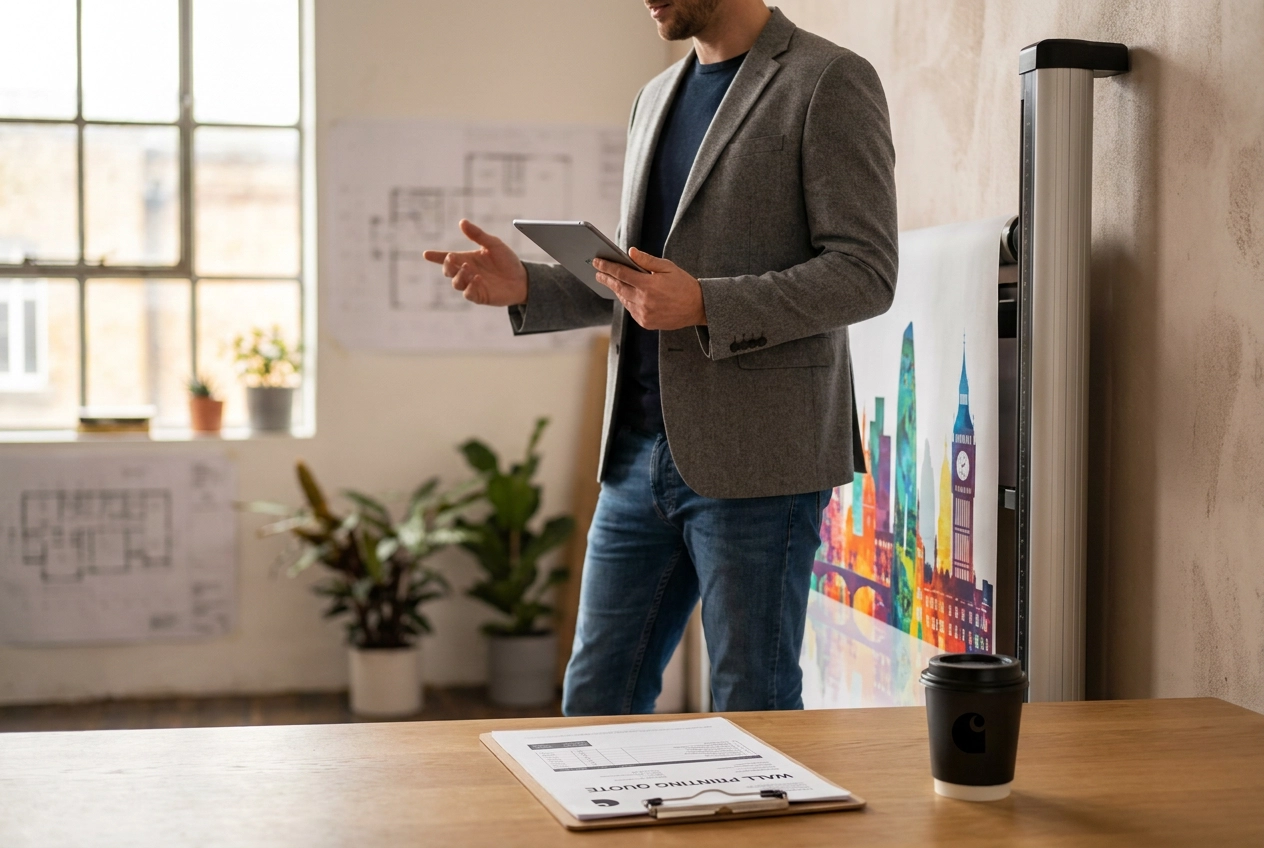
Machine Canvas removes the financial risk entirely by providing a free design mock-up before any commitment. You see the artwork scaled to your actual wall before you approve a penny of spend.
Buyers arriving with a print-ready file in the correct format and resolution pay less for file preparation than those starting from a concept sketch or a compressed logo image. Clarify your file state in the initial brief.
Cost Driver 4: Location, Access and Logistics
Once the design file is resolved, the next variable that can move your quote significantly is one buyers rarely think about until it appears on an invoice: getting the equipment to your wall.
Wall printing machinery is large, precision-calibrated and requires a skilled team to transport, set up and operate safely. That team's transit time is a legitimate project cost, and any transparent quote will reflect it as a line item rather than an expense that quietly inflates the per-m² rate.
Location affects your wall printing price in two distinct ways. First, distance from the supplier's base determines travel cost directly. Second, urban access conditions, including parking restrictions, loading bay availability and congestion zone fees, affect setup time and what additional permits are needed. A central London hotel and a rural Cumbrian retreat both present real logistics costs, but in entirely different ways.
Wall and floor printing, right across the UK is what Machine Canvas delivers from its Lancashire base, serving England, Scotland and Wales. A Glasgow gym and a London restaurant are both serviceable, but the logistics cost will differ. A brief video call or site assessment before the formal quote allows both parties to map those costs accurately rather than discover them later.
Access complexity adds its own costs. High walls above standard working height may require scaffolding, a scissor lift or an elevated working platform. Rental and setup time for these are real additions. Reputable suppliers raise this during the site assessment, never on the final invoice.
Hard-to-access locations, including underground car parks, multi-storey stairwells and sites with narrow delivery corridors, carry the same principle: disclose them upfront when requesting a wall printing service quote. In city centres, congestion zone charges, permits and parking fees are variable but predictable if the supplier asks the right questions during the initial briefing.
Cost Driver 5: Finish, Protection and Long-Term Durability
Once logistics are confirmed, the final cost lever buyers most frequently underestimate is what goes over the ink once printing is complete.
UV-cured inks bond directly to the surface and are inherently more resistant to fading, moisture and abrasion than solvent or water-based alternatives. For many interior walls in low-traffic areas, that base durability is sufficient. For exterior surfaces, car park floors, gym walls and any space subject to regular cleaning or heavy footfall, a lacquer-sealed topcoat is not optional; it separates a print that lasts from one that degrades within a couple of years.
Machine Canvas applies a lacquer-sealed finish as standard on every project, built into the project price rather than presented as an add-on. A lower headline figure that excludes protective finishing is not a like-for-like comparison.
The durability case is compelling in lifecycle terms. Direct-to-surface wall prints last in excess of ten years indoors under normal conditions; premium wallpaper typically reaches five to seven years before bubbling, seam separation or colour shift forces replacement. Factor in removal, remediation and rehang costs, and the economics shift decisively in favour of printing directly onto the wall. For a restaurant feature wall or hotel corridor, avoiding one replacement cycle over a decade can recover the original print cost entirely.
For car park floors and external public realm surfaces, anti-graffiti and anti-scuff coatings add further protection. Ask explicitly whether these are included in your quote or itemised separately.
Finally, request a written colour-fastness statement from any supplier you are seriously considering. A commitment covering UV exposure, cleaning chemicals and foot-traffic resistance is a straightforward mark of confidence. A supplier unwilling to provide one is telling you something worth knowing before you sign.
What Wall Printing Actually Costs in the UK: Benchmarks and Ranges
With finish and durability accounted for, the natural next question is: what does all of this actually add up to in pounds?
Machine Canvas publishes a starting price of around £250, representing the minimum viable project threshold once equipment transport, setup time and operator costs are absorbed. Areas below one to two m² simply do not spread those fixed overheads far enough to make commercial sense for either party.
For a typical residential feature wall of 8 to 12 m² with a photorealistic design on a standard prepared surface, expect a mid-range investment. A full commercial fit-out covering multiple walls, a floor graphic and a bespoke design commission moves into a higher tier where volume discounts reduce the effective per-m² cost meaningfully.
International benchmarks contextualise UK pricing usefully. Belgian and Dutch operators publish rates of €75 per m² and above, with setup fees of €325 to €350. Those figures are not directly interchangeable with UK quotes given currency, VAT and scope differences. At the premium end, the US market operates at $$22 to $$50 per square foot, roughly £190 to £430 per m², positioning UK pricing as competitive for the quality tier on offer.
The clearest signal of a credible supplier is pricing transparency: a per-m² rate, a stated setup fee, a separately listed design or file preparation cost and an explicit position on travel and logistics. That structure shows you their cost model honestly.
Always request an itemised quote rather than a lump sum. The breakdown reveals where every pound is going and makes genuine like-for-like comparison possible. Further guidance on evaluating quotes, alongside examples of completed projects, is available across the Machine Canvas wall and floor printing blog.
Hidden Costs to Ask About Before You Sign Anything
Knowing the headline rate per square metre is useful; knowing what that rate excludes is what protects your budget. Seven line items routinely disappear from wall printing quotes and reappear on final invoices.
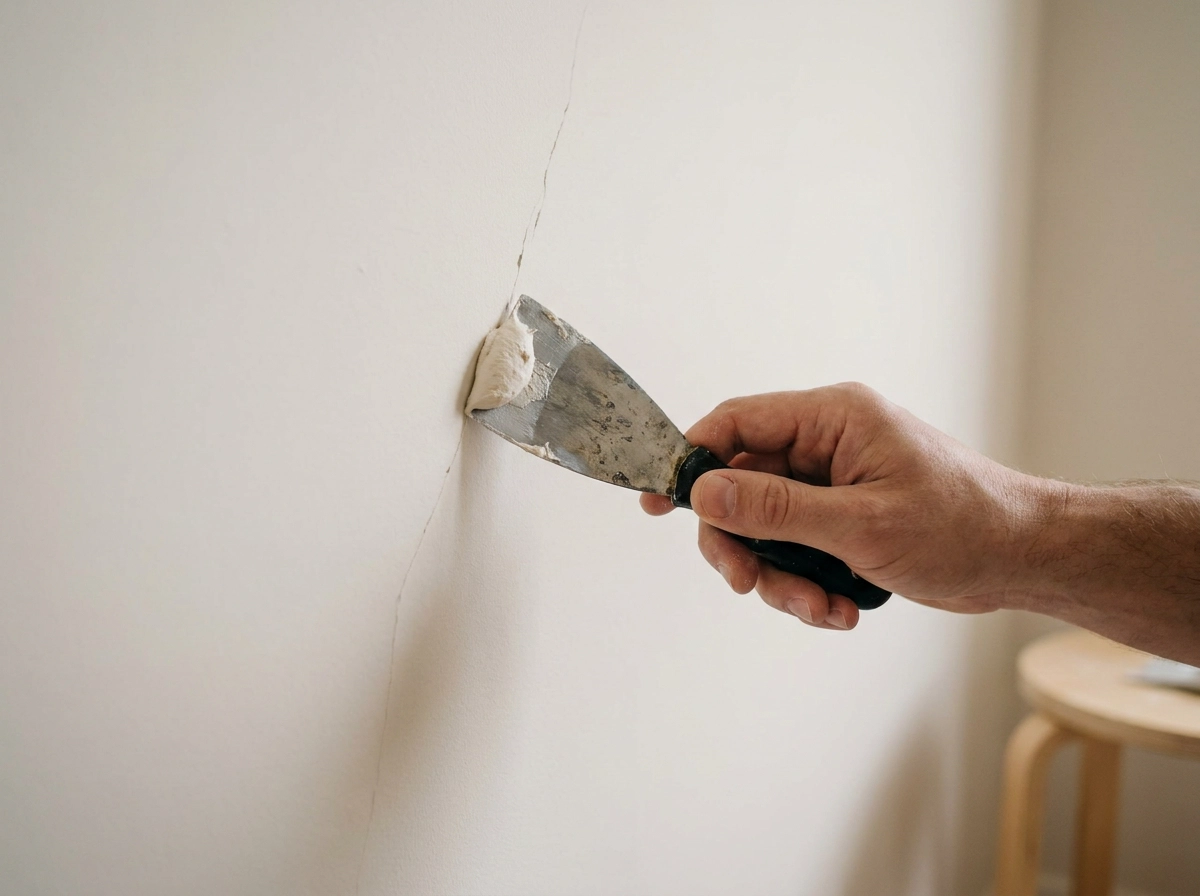
Surface preparation. Patching cracks, cleaning contamination or applying a primer coat is skilled labour that takes time. Ask directly whether prep work is included in the quoted price or assessed and billed separately once the team arrives on site.
Design revision rounds. Most design fees cover a defined number of amendment rounds. "Unlimited revisions" is rarely a genuine operational policy; ask how many rounds are included and what each additional round costs before you approve the design brief.
Travel and parking. A project in central Manchester, Birmingham or London carries real logistics costs: mileage, congestion charges, parking permits and loading bay bookings. Ask whether travel is charged at a fixed rate or per mile, and confirm who is responsible for parking and permit fees.
Scaffolding and elevated access. Printing above standard working height requires a scissor lift, elevated platform or scaffolding, none of which is cheap to hire. If your wall is tall, get confirmation in writing that elevated access is either included or separately itemised before work starts.
Topcoat and finishing. A protective lacquer or anti-scuff coating is essential for exterior walls and floor graphics; without it, warranty coverage typically does not apply. Confirm whether the finish is standard or optional.
Post-installation inspection. A credible wall printing service includes a formal quality check and sign-off before the team leaves. If your quote is silent on this, ask.
VAT. On a commercial project worth several thousand pounds, the difference between VAT-inclusive and VAT-exclusive pricing is material. Confirm the VAT status of every figure before you compare quotes.
Red Flags in a Wall Printing Quote and How to Spot Them
Knowing what to ask for is only half the job. Knowing when to walk away is the other half.
Deposit before quote. Any supplier requesting payment before issuing a written, itemised quote is operating outside normal professional standards. A quote should be free, detailed and entirely obligation-free. Money changes hands after you have approved a scope in writing, not before.
Lump-sum pricing. A single figure with no breakdown makes it impossible to compare quotes or understand what you are actually buying. Insist on line-by-line itemisation: print, design, travel, materials and finishing listed separately. If a supplier cannot or will not provide that, the number is not a quote; it is a guess dressed up as one.
Vague warranty language. "We guarantee our work" tells you nothing useful. A credible warranty specifies duration, what is covered, what voids it, and whether it distinguishes between interior and exterior surfaces. Machine Canvas commits to five years on interior prints and three years on exterior work, in writing, before you sign anything. That is the standard to benchmark against.
No substrate-specific portfolio. Printing on smooth plaster is not the same as printing on brick, exterior render or a commercial floor. A supplier who cannot show you completed work on your specific surface type may not have done it before. Ask for references and photographs, not just a general gallery.
No mock-up before commitment. Approving artwork you cannot visualise at scale is an unnecessary risk. Machine Canvas provides a free design mock-up before any financial commitment, allowing you to see the finished concept on your actual wall before a single pound is spent.
Artificial time pressure. "This price expires Friday" is a sales tactic, not a pricing reality. A professional wall printing service prices with enough stability that you have adequate time to evaluate, compare and decide without being rushed.
Wall Printing vs. Wallpaper, Vinyl and Hand-Painted Murals: Real Cost Comparison
Once you understand what separates a credible quote from a misleading one, the next logical question is whether wall printing is actually the right medium compared to the alternatives. The cost comparison is less straightforward than it first appears.
Premium wallpaper carries material cost, professional hanging labour, seam alignment and a serviceable lifespan of five to seven years before bubbling, peeling or colour fade sets in. At that point the removal and replacement cycle begins again, with all associated labour costs baked in a second time.
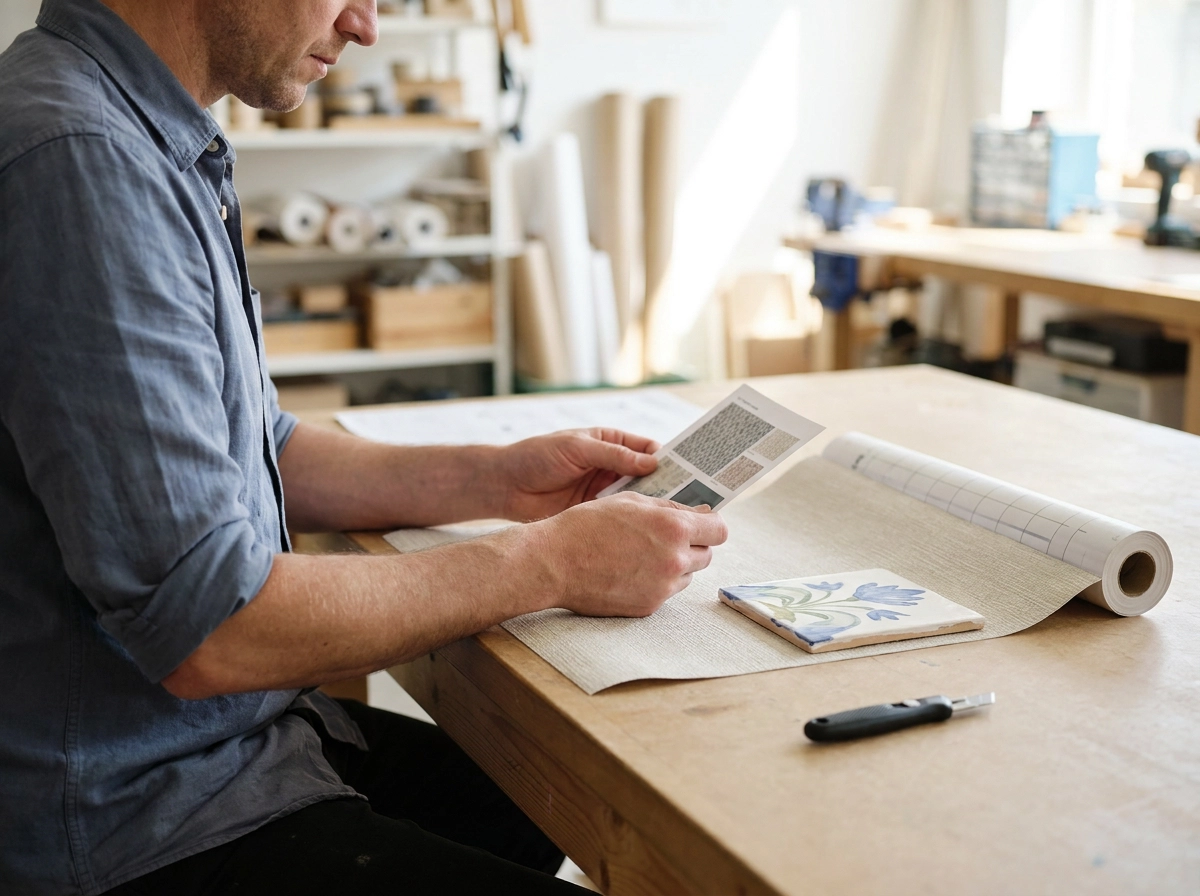
Large-format vinyl decals are cheaper upfront but that advantage erodes quickly. Edges lift, seams show, and air bubbles are a persistent quality issue in high-traffic areas. Removal leaves adhesive residue requiring remediation before any replacement treatment is applied.
Hand-painted murals produce genuinely distinctive results but carry significant day-rate labour costs, long execution timelines, and variable durability. Crucially, a hand-painted mural cannot be faithfully reproduced across ten hotel locations at consistent quality.
Direct-to-surface printing at 2400DPI delivers photorealistic output at a per-square-metre cost that becomes competitive with premium wallpaper once you include hanging labour and account for a 10-plus year durability advantage. The lifecycle cost comparison favours printing on the wall.
For multi-site operators, the reproducibility of a digital file is decisive. A hotel chain can deploy identical artwork across fifty properties with pixel-perfect consistency. No hand-painted or wallpaper solution can match that at equivalent quality.
The visual difference is not marginal. Picture a 3D safari mural where a giraffe leans its neck through the wall into the room. Now picture a flat canvas print of the same subject at the same scale. They are not versions of the same thing. They are categorically different experiences.
How to Brief a Wall Printing Service to Get an Accurate Quote the First Time
Knowing why a wall print is worth the investment is only half the equation. Getting a quote that reflects your actual project rather than a supplier's best guess requires you to arrive prepared.
Measure before you make contact. Record height, width and every obstruction: sockets, switches, door frames, window reveals. Suppliers who receive real dimensions produce meaningful quotes; those who don't are estimating.
Photograph the surface in good light and document its condition. Note any cracks, damp staining, existing paint type, texture profile or adhesive residue from previous installations. Surface condition directly affects preparation costs, and disclosing it upfront prevents unwelcome additions to the final invoice.
Bring a design direction, however rough. A mood board, a reference image, or a plain-language description of the outcome you want (photorealistic landscape, abstract colour wash, branded graphic with a logo lock-up) gives the supplier enough to scope design work accurately. Vague briefs produce vague quotes.
Specify your timeline and access constraints. An operational hotel corridor with a two-hour access window each morning is a different logistical proposition to an empty commercial unit. If scaffolding may be needed, or if the building has restrictions on when external equipment can be erected, say so at the outset; these factors drive scheduling and cost.
Use the hidden-cost checklist from the previous section as a prompt. Ask what is included and what is excluded, line by line. A supplier who answers without hesitation is demonstrating operational transparency; one who deflects is not.
Request a free design mock-up. Machine Canvas provides one before any commitment is made. Seeing the artwork scaled to your actual wall dimensions resolves more uncertainty in a single step than any amount of specification back-and-forth.
The Commercial Case: ROI for Business Buyers Considering a Wall Mural
Once you have your brief in order, the commercial case for acting on it becomes hard to ignore.
For hotels, restaurants and leisure venues, a feature wall is no longer decoration; it is brand infrastructure. A visually distinctive space generates guest photography and organic social sharing that a plain painted wall cannot produce. That user-generated content extends the venue's marketing reach without additional spend, every day after the initial investment.
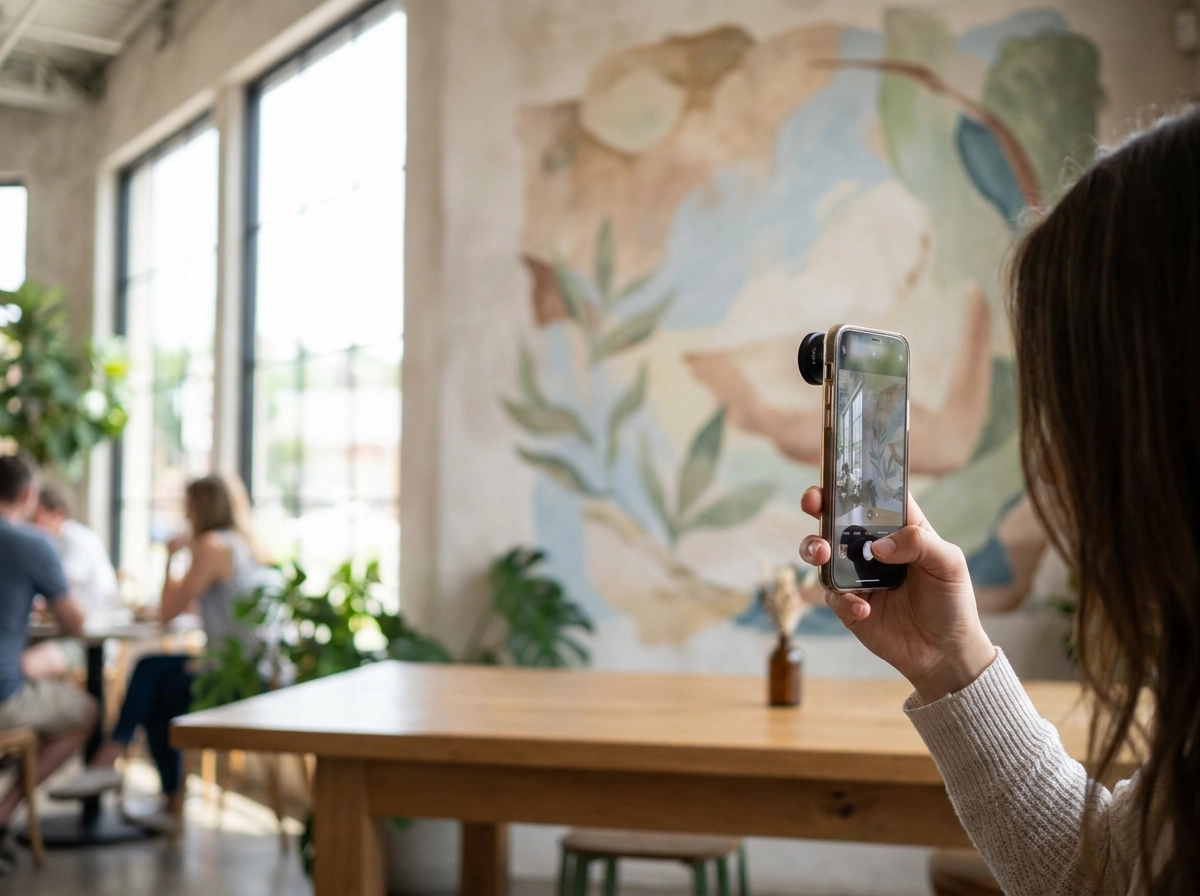
Gyms and fitness centres see a similar compounding return. A reception or studio transformed by an immersive wall printing design signals premium quality immediately, supporting both membership pricing and retention. The wall is effectively working as a marketing asset on a continuous basis.
Retail fit-outs extract dual value from printed surfaces. Floor graphics and wall murals direct footfall and reinforce brand identity while creating shareable moments that carry the brand beyond the physical store. The printing on wall design functions simultaneously as wayfinding and content.
Offices and co-working spaces benefit from a different calculus: branded wall graphics replace costly architectural features such as decorative panels or feature lighting at a fraction of the equivalent cost. Critically, they are updatable if a brand refreshes or a tenant changes, which no structural feature can match.
Car park floor graphics make the commercial case in operational rather than aesthetic terms. Direct-to-surface printing produces durable, vehicle-rated graphics that serve both wayfinding and safety functions, eliminating the ambiguity between decorative intent and practical requirement.
Machine Canvas serves all of these sectors, including schools, automotive showrooms and public realm projects. That breadth reflects the technology's genuine versatility and the range of measurable ROI cases available to business buyers across the UK.
Get a Quote That Means Something: The Only Honest Starting Point
The wall printing UK price you actually pay is the sum of five variables: surface type, square meterage, design complexity, location logistics and finish. None of those resolve into a real number until a supplier understands your specific project. A quote issued without that information is, at best, an estimate dressed as a figure.
The buyers who receive the most accurate first quote arrive prepared. Measure the wall. Photograph the surface. Define a design direction, even roughly. Disclose access constraints upfront. Work through a hidden-cost checklist before the conversation starts. That preparation collapses the gap between the number you expect and the invoice you receive.
The single most powerful tool for closing that gap entirely is a free design mock-up before any commitment. It converts an abstract specification into a visual confirmation: your actual wall, your chosen artwork, scaled and rendered so you can see precisely what you are approving. Close your eyes for a moment and picture it. Ultra-high-definition photorealism printed directly onto the surface in front of you, not hanging on it, not layered over it; the wall itself rendered in 2400DPI colour and depth. That is what you are confirming before you spend a penny.
Machine Canvas provides that mock-up with no obligation, backed by a five-year interior guarantee, a three-year exterior guarantee and nationwide coverage across England, Scotland and Wales.
Bring your brief, request the mock-up, and get a quote you can actually build a budget around.
Conclusion
Wall printing prices in the UK are not arbitrary. They follow a clear logic: surface area, substrate condition, design complexity, site logistics and finish specification. Understand those five drivers and no quote will catch you off guard.
The buyers who get accurate numbers arrive prepared with measurements, photographs and a defined design direction. They ask about hidden costs before signing. They compare wall printing against wallpaper and vinyl on total cost, not just day-rate.
Most importantly, they verify before they commit. A free design mock-up transforms a vague budget figure into a confident decision backed by visual proof.
Machine Canvas offers that mock-up with no obligation, a five-year interior guarantee and nationwide coverage across the UK.
Measure your wall, gather your brief, and request a quote built on real information. That single step is the difference between a budget estimate and a number you can trust.